
Foreign Traffic Violations: Do They Follow You Home?
Free to compare
Your State DMV Won't Add Points for Most Foreign Violations
U.S. state motor vehicle departments typically do not receive automated reports of traffic violations issued by foreign governments. If you receive a speeding ticket in France, a red-light citation in Canada, or a parking fine in Mexico, that violation will not appear on your state driving record and will not add points to your license.
Two exceptions exist: violations in Canadian provinces and Mexican border states sometimes flow into U.S. state records through reciprocal data-sharing agreements, and serious violations that result in international license suspension or arrest may be reported through diplomatic channels. Under current state DMV point rules, these shared violations are treated the same as out-of-state U.S. violations and may add points if your home state participates in the Driver License Compact.
The absence of a DMV record does not guarantee the absence of an insurance consequence. Your carrier does not rely solely on your state's point system to determine surcharges.
How Insurance Carriers Learn About Foreign Tickets
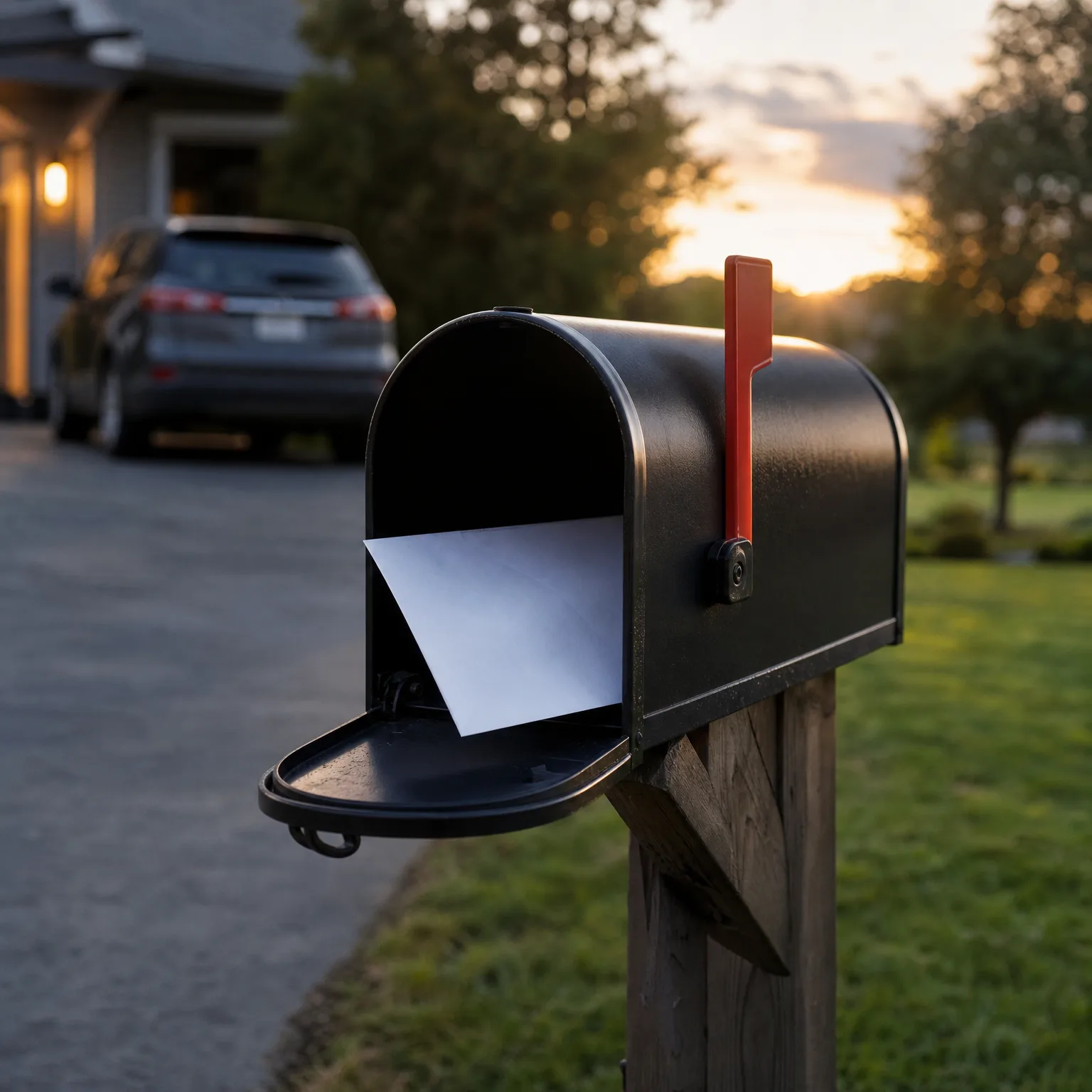
Carriers discover foreign violations through three primary channels: rental car incident reports, renewal application disclosure requirements, and direct inquiries triggered by claims or coverage changes.
If you were driving a rental car when cited, the rental company typically reports the violation to the carrier that issued the insurance coverage at the time of rental. If you used a personal credit card's rental coverage or purchased the rental company's collision damage waiver, that carrier receives the incident report and may share it with your primary auto insurer through industry databases like the Comprehensive Loss Underwriting Exchange.
At renewal, most carriers ask whether you have received any traffic citations in the past three to five years. The question does not specify U.S. jurisdictions only. A false answer can void your policy retroactively if the carrier later discovers the undisclosed violation through a claim investigation or coverage audit. Carriers and surcharge schedules vary by state and change periodically, but the disclosure obligation applies universally.


Rate Impact Without DMV Points
A foreign violation that never reaches your state DMV record can still trigger a surcharge if your carrier learns about it. The surcharge is applied based on the carrier's internal underwriting guidelines, not your state's point system.
A minor speeding ticket in a foreign country typically adds 10-20% to your premium for three years if the carrier surcharges it, comparable to a single minor violation on your U.S. record. A serious violation such as reckless driving, driving under the influence, or leaving the scene of an accident can trigger a 30-50% increase or policy non-renewal, even without a corresponding DMV entry.
The asymmetry creates a documentation risk: you have no official state record to dispute if the carrier's understanding of the foreign violation is incorrect. If the carrier receives a report that describes the violation in a foreign language or uses a classification system that does not map cleanly to U.S. violation categories, you may be surcharged for a more serious offense than you actually committed.

Put Your Record Up Against Every Rate
Compare Rates for Your Driving RecordWhen Disclosure Helps and When It Doesn't
Disclosing a foreign violation at renewal protects you from a retroactive policy voiding, but it does not prevent a surcharge. Carriers treat voluntary disclosure the same as discovery through other channels.
If the violation was minor, occurred in a jurisdiction with no data-sharing agreement with the U.S., and did not involve a rental car or insurance claim, the probability that your carrier will discover it without your disclosure is low. The decision to disclose becomes a risk calculation: guaranteed surcharge now versus possible policy cancellation later if the violation surfaces during a claim investigation.
If the violation was serious, involved an accident, or triggered an insurance payout through a rental company or travel insurance policy, assume your carrier will learn about it. Disclose it at renewal to preserve your policy's validity. A surcharge is preferable to a voided policy and a lapse in coverage history, which will follow you to every future carrier.

Canadian and Mexican Violations: The Cross-Border Exception
Canadian provinces share violation data with U.S. border states through reciprocal agreements administered under the Driver License Compact. If you receive a speeding ticket in Ontario and your home state is New York, Michigan, or another compact member, the violation will appear on your state driving record and add points according to your state's schedule.
Mexican violations are less reliably reported, but violations in border states such as Baja California or Sonora may be shared with California, Arizona, Texas, and New Mexico through bilateral law enforcement agreements. A DUI or reckless driving charge in a Mexican border state is more likely to reach your U.S. record than a minor speeding ticket in Mexico City.
Once a foreign violation appears on your state DMV record, it is treated identically to a domestic violation for insurance purposes. Your carrier will surcharge it according to the same schedule they use for violations issued within your home state.

What to Do If a Foreign Violation Appears on Your Quote
If your renewal quote includes a surcharge for a foreign violation, request a copy of the incident report your carrier used to justify the increase. Carriers must provide the documentation they relied on when applying a surcharge.
Review the report for accuracy. If the violation description is incorrect, provide your original citation and any translation or legal documentation that clarifies the actual offense. Carriers will adjust surcharges if the violation was misclassified, but you must initiate the dispute.
If the surcharge is accurate but pushes your premium beyond your budget, compare quotes from carriers that specialize in drivers with violations. Standard-tier carriers apply uniform surcharge schedules, but non-standard carriers evaluate violations individually and may weigh a foreign ticket less heavily than a domestic one, particularly if your U.S. driving record is otherwise clean.
Frequently Asked Questions
Will a speeding ticket in Europe show up on my U.S. driving record?
Most European traffic violations do not appear on U.S. state driving records because European governments do not share violation data with U.S. motor vehicle departments. Your insurance carrier may still learn about the ticket through rental car incident reports or your own disclosure at renewal, which can trigger a surcharge even without a DMV entry.
Do I have to tell my insurance company about a ticket I got in Canada?
Canadian violations in border provinces are often reported to U.S. state DMVs through reciprocal data-sharing agreements, so your carrier will likely discover the violation when they pull your driving record at renewal. Failing to disclose it when asked directly on your renewal application can void your policy if the carrier later finds the undisclosed ticket.
How long does a foreign traffic violation affect my car insurance rates?
If your carrier surcharges a foreign violation, the increase typically lasts three years from the violation date, matching the standard surcharge period for domestic tickets. The violation may remain visible to your carrier longer if it appears on your state DMV record through a cross-border data-sharing agreement.
Can I remove a foreign violation from my insurance record?
Foreign violations that do not appear on your state DMV record cannot be removed because they exist only in your carrier's internal files and industry claims databases. If the violation was recorded incorrectly, you can dispute it by providing your original citation and translation, but you cannot erase an accurately reported foreign ticket.
Related Articles

Out-of-State Violations: Do Points Follow You Home?
5/18/2026
Out-of-State Tickets and Points: Insurance Reality
5/18/2026

Multi-State Violations: How Points Are Reported
5/18/2026

Out-of-State Tickets: How Points Transfer to Your Record
5/18/2026

Out-of-State College Ticket Points: Home State Impact
5/18/2026

Points From Violation in Friend's Car: Your Record
5/18/2026