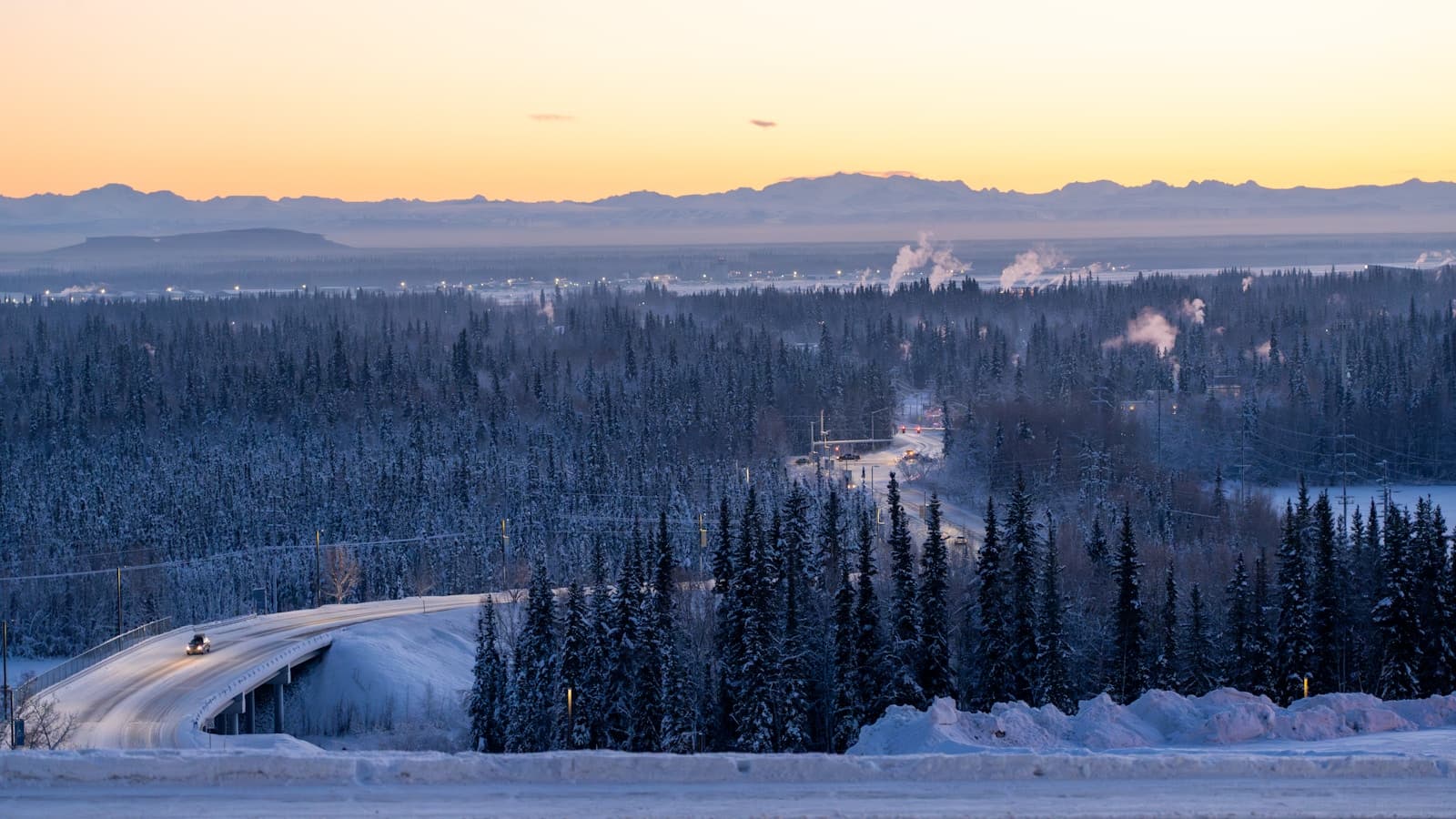
What Affects Rates in Fairbanks
- Extended Winter Driving Season: Fairbanks experiences temperatures below -40°F and months of ice-covered roads, increasing accident frequency for all drivers. For high-risk drivers with existing violations, insurers view winter collision probability as compounded risk, often adding 15–25% to base premiums compared to temperate climates.
- Limited Carrier Competition: Fairbanks has fewer standard carriers willing to write high-risk policies than Anchorage, pushing more DUI and suspension cases to non-standard insurers. This concentration reduces competitive pricing pressure, keeping rates elevated for drivers who can't access preferred carriers.
- Low Population Density and Remote Location: With fewer repair facilities and longer emergency response times outside the city core, insurers price comprehensive and collision coverage higher for high-risk drivers. A DUI in Fairbanks can mean $200–$400 more annually in full-coverage costs than the same violation in larger Alaska cities.
- Elevated Uninsured Motorist Exposure: Rural areas surrounding Fairbanks show higher uninsured driver rates, increasing the importance of uninsured motorist coverage for high-risk drivers already facing premium surcharges. Adding UM/UIM coverage typically costs $8–$15/month but protects against gaps in recovery after at-fault drivers with no coverage cause accidents.
- Court-Mandated SR-22 Processing Timeline: Alaska courts require continuous SR-22 coverage for 3 years following DUI convictions or certain suspensions, and any lapse restarts the clock. In Fairbanks, where winter travel can delay mail and office access, drivers must maintain coverage year-round to avoid filing interruptions that trigger license re-suspension.
Compare rates from carriers that work with drivers who have points
Standard carriers surcharge heavily after violations. These specialists price your specific record differently.
Get Your Free QuoteCoverage Recommendations
Cost estimates are based on available industry data and vary by driver profile. These are not insurance quotes.
SR-22 Insurance
SR-22 is a certificate filed by your insurer with Alaska proving you carry state-minimum liability coverage. In Fairbanks, the filing fee runs $50–$75, but the underlying high-risk policy costs $150–$350/month depending on your violation, with DUI cases at the higher end.
$50–$75 filing fee + high-risk premiumsEstimated range only. Not a quote.
Liability Insurance
Alaska requires 50/100/25 minimum liability limits, but high-risk drivers in Fairbanks often face surcharges of 80–150% above standard rates. Raising limits to 100/300/100 adds $15–$30/month and provides essential protection given Fairbanks' winter accident risks and elevated medical costs.
$100–$200/mo for minimums with violationsEstimated range only. Not a quote.
Full Coverage
Full coverage (liability + comprehensive + collision) for high-risk drivers in Fairbanks typically costs $200–$450/month, reflecting Alaska's harsh climate and limited repair infrastructure. Drivers with financed vehicles must carry this despite rate increases, making carrier shopping critical to affordability.
$200–$450/mo with high-risk recordEstimated range only. Not a quote.
Non-Standard Auto Insurance
Non-standard carriers specialize in DUI, suspension, and major violation cases that standard insurers decline. In Fairbanks, carriers like The General, Bristol West, and Dairyland dominate this market, offering coverage at $150–$350/month with payment plans that accommodate drivers rebuilding after license reinstatement.
$150–$350/mo depending on violationEstimated range only. Not a quote.